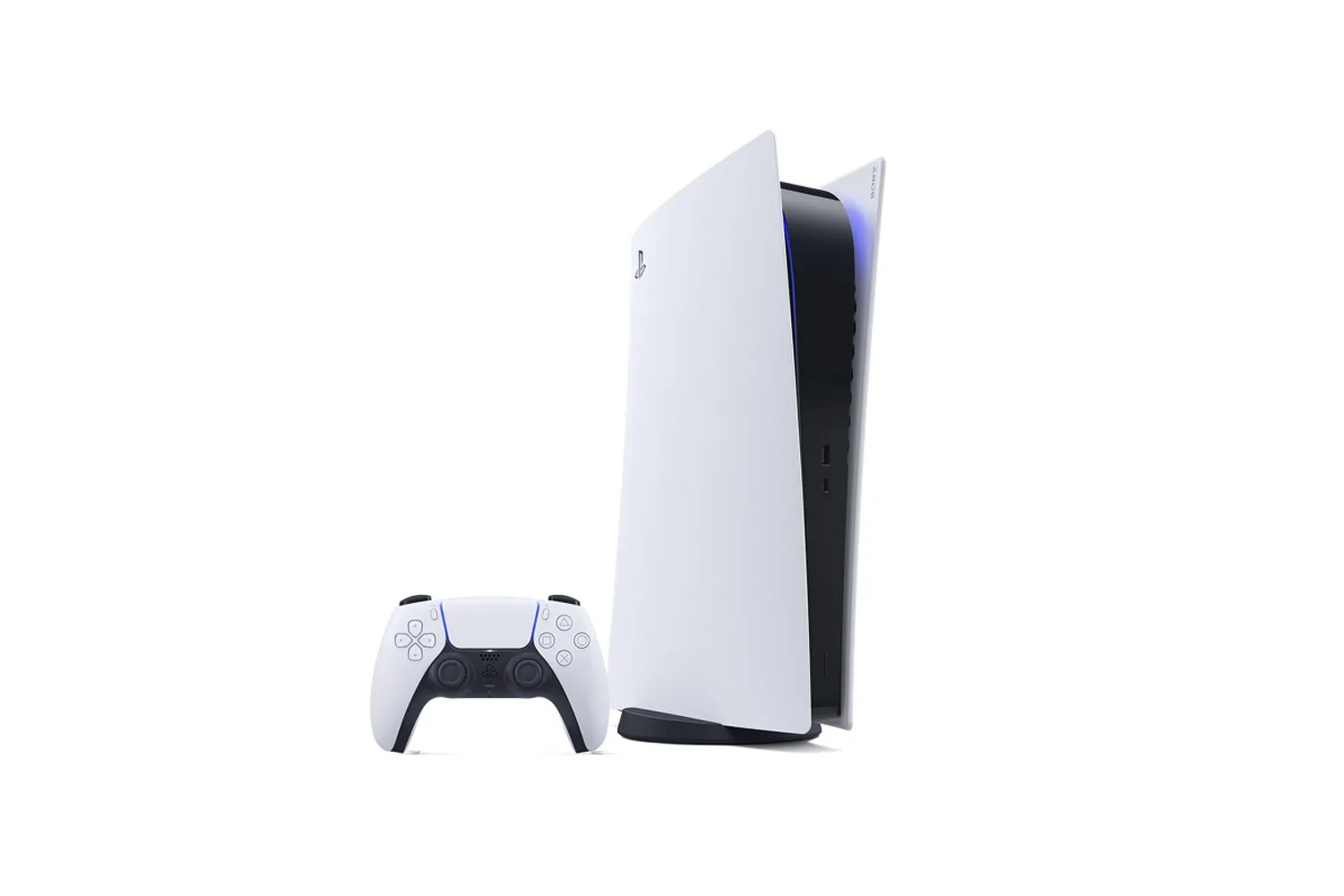
In Canada, a standard PlayStation 5 now costs $819.99, up from $649.99 before Sony’s April 2 price increase. The biggest game of the year, Grand Theft Auto VI, arrives November 19 at $109.99, and Canadian buyers who pick up a boxed copy will get a download code, not a disc.
That box with only a code inside sums up where PlayStation is heading. In July, Sony said it would stop making discs for new games altogether. Over the past few weeks, it has also been fighting hackers through a string of firmware updates, fielding reports of accounts taken over through its own support desk, and hearing one of the people who built PlayStation say Sony has created “friction” with its most loyal fans.
None of it shows up as a crisis in Sony’s earnings. But together, it adds up to a growing problem: in an all-digital world, Sony is asking players to trust it with everything, at the moment that trust looks thinnest.
The business is fine. The mood isn’t.
On paper, PlayStation is doing well. In its April-to-June quarter, Sony’s Game & Network Services division made 202 billion yen in operating income (about $1.8 billion), up 37% from a year earlier, on flat revenue, according to its results as reported by GIGAZINE. Part of that jump came from U.S. tariff refunds and currency effects. Digital downloads made up 82% of full-game sales on PS4 and PS5.
The hardware is slowing, though. Sony shipped 1.6 million PS5 consoles in the quarter, down from 2.5 million a year earlier, for a total of 95.3 million since launch. Price increases like Canada’s in April don’t help. Sony attributed them to “continued pressures in the global economic landscape.”
The pattern is clear: fewer people are buying consoles, and the ones who already own one are spending more of their money in Sony’s own store. That’s the context for everything else.
The end of the disc
On July 1, Sony announced on the PlayStation Blog that “physical game disc production for all new games releasing on PlayStation consoles will be discontinued starting January 2028.” Games will still be sold in stores, but “in digital formats only.” Games already released on disc, and those released on disc before then, aren’t affected. Sony called it “a natural direction” as “the general preference for digital media significantly outpaces physical discs.” The same day, it said it would start closing the PS3 and PS Vita stores this year, globally by 2027.
The numbers support Sony’s case, up to a point. Daniel Ahmad, an analyst at Niko Partners, told CBC News that 78% of Sony’s full-game unit sales over the past year were digital. That still left about 70 million physical PlayStation games sold. And Ahmad was blunt about the motive: the decision is “entirely a platform-led decision that is designed to cut costs for Sony, eliminate resale [and] used markets, and drive 100 per cent of revenue through the PlayStation Store.”
The backlash was immediate and loud. A preservation group called a one-week #PSBlackout boycott starting July 26. An analysis by social media monitoring firm Cyabra found the controversy drew more than 100 million views on X, with 70% of the conversation negative. Cyabra also found that inauthentic accounts made up about 25% of the boycott conversation, and as much as 43% of replies under some official PlayStation posts. Its conclusion is worth repeating, though: the bots amplified the anger, they didn’t create it. The grievance, mostly about ownership and control, was real.
Even Ken Kutaragi, who led the creation of the original PlayStation, PS2 and PS3, says so. He told VGC this month that the decision “has caused some friction with game enthusiasts,” Push Square reports. He also said pressing discs is no longer “economically reasonable,” and that for many players a disc has become a “metaphor” for owning a game.
A month of cat and mouse over firmware
Then came the hacks. A public exploit chain called Relapse lets PS5 consoles on firmware 13.60 or earlier run unsigned software, Techweez reports. That opened the door to homebrew apps and a PS2 emulator. Consoles on the newer 14.x firmware aren’t vulnerable, and Sony doesn’t let you roll back.
It didn’t stay at homebrew. A follow-up project called Overdrive offered a clone of the PlayStation Store that let users download full games for free. HotHardware reports it was taken down within 24 hours after a cease-and-desist. Other outlets describe the legal demand as suspected rather than confirmed, and Sony hasn’t commented.
The projects keep getting more ambitious. Over the weekend, a GitHub project called Playden for PS5 began letting jailbroken consoles sign in to Steam and install PC games, Tom’s Hardware reports. It runs Windows games through a PS5 port of Wine, the compatibility layer, and gives each one its own tile on the home screen. Its developer calls it an alpha, results vary from game to game, and it’s an unofficial Steam client that Valve doesn’t support.
Sony’s response has been a run of quiet updates. Here’s what its official release notes say:
| Firmware | Released | Sony’s notes |
|---|---|---|
| 14.00 | Sept. 16 | Feature changes, and “improved system software performance and stability” |
| 14.10 | Oct. 1 | “We’ve made some security fixes to the system software.” |
| 14.20 | Oct. 21 | “We’ve improved the messages and usability on some screens.” |
Sony’s notes never mention jailbreaks. But Notebookcheck reports, based on users’ reports, that consoles left on older firmware for the exploits can’t sign in to PlayStation Network. That cuts them off from online play, the store, and, for some games, license checks. Sony’s own sign-in help page lists out-of-date system software as the first thing to check, so requiring the latest firmware for PSN isn’t new. What 14.10 seems to have changed is closing the doors the exploits used.
The game isn’t over. Reports say a homebrew developer has shown limited access on 14.10 privately, and a researcher posted a partial, “userland” exploit on 14.20 the day it came out. Neither is a public, working jailbreak. As Vice notes, dataminers have speculated that GTA VI will require the latest firmware, but neither Sony nor Rockstar has confirmed that or commented.
The timing explains Sony’s urgency. With the year’s biggest game three weeks away, a working jailbreak on current firmware would be a piracy problem with real money attached.
The cost falls on regular players too. Updates are arriving more often, and some newer physical games require the latest firmware to run, Push Square notes. That has set off a fresh wave of complaints on social media. Push Square’s Sammy Barker points out that consoles have tied games to firmware versions since the PS3, and argues Sony is right to protect its platform. Coming on top of the disc decision, though, each forced update reads to some fans as one more way Sony controls what they own.
When your account is your library
The other worry is closer to home for regular players. On October 3, a PlayStation fan account with more than 30,000 followers on X, RealRadec, said his PSN account had been taken over, and that changing his password, signing out every device and turning two-factor authentication back on didn’t stop the attacker from changing his email, PSINFO reports. Podcaster Colin Moriarty lost his account in May. Investigations into earlier cases pointed to social engineering through customer support: attackers impersonated owners using a few basic details, like a PSN name, an email address and past purchase information. Sony’s servers weren’t directly breached, and Sony hadn’t commented on the latest case.
Then there’s reliability. On July 24, a PSN outage hit account management and digital purchases across PS5, PS4, PS3, PS Vita and the web, Kotaku reported. Sony restored service later that day but didn’t explain what happened.
Each of these would be a nuisance on its own. In an all-digital world, they’re something more. Your PSN account is your game collection. If someone talks their way into it, or the network is down, or your console falls off the supported firmware, your games are as available as Sony’s systems allow, and no more.
What it means in Canada
What Canadians pay to play on PlayStation has gone up across the board this year.
| Before April 2 | Now | |
|---|---|---|
| PS5 | $649.99 | $819.99 |
| PS5 Digital Edition | $579.99 | $749.99 |
| PS5 Pro | $959.99 | $1,099.99 |
| PS Portal | $269.99 | $319.99 |
Source: MobileSyrup.
Fewer discs also means fewer used games. Trading in and buying second-hand discs at stores like EB Games has long been a way to offset the price of new releases. A download can’t be resold, and that’s the part of Ahmad’s comment that should worry budget-conscious players most.
It matters for Canadian developers, too. Toronto developer Benjamin Rivers told CBC that a physical release helps smaller games get noticed in a crowded digital store: it can “get eyeballs on something that people might have just missed the first time around.”
If you play on PlayStation, three practical steps help:
- Lock down your account. Turn on two-factor authentication (a passkey if your setup supports it), use a unique password, and don’t post screenshots of receipts or purchase emails. Those details have been used to fool support agents.
- Keep your console updated unless you’re prepared to lose online access. Old firmware means no PSN.
- Decide what you want to own. If physical copies matter to you, buy disc versions of the games you care about while they’re still being made. That window closes in January 2028.
What to watch
- November 19: GTA VI launches. Watch whether boxed copies with only a code inside meet resistance at Canadian retailers, and whether any firmware requirement is confirmed.
- The next firmware updates, and whether a full jailbreak of current firmware goes public.
- Sony’s support process: whether it tightens account recovery, or comments on the takeovers at all.
- The PlayStation 6. Ahmad told CBC the disc decision “guarantees” the next console ships without a disc drive. Sony hasn’t announced the PS6.
Why it matters: Sony’s argument for going all-digital is reasonable: most people already buy downloads, and discs cost money to make and ship. But an all-digital PlayStation asks players to trust Sony with their whole library: to keep accounts safe, keep the network up, and keep games playable for years. This month’s hacks, lockouts and takeovers are exactly the kind of thing that tests that trust. For Canadians, who are already paying more for the hardware and are about to lose the used-game market that helped offset it, the question isn’t whether digital is convenient. It’s whether Sony is earning the trust it’s asking for.